Researcher · Scientist · Science Communicator
KricketRessler
Exploring the hidden world of Stentor — giant single-celled organisms that can learn, decide, and chase light — from Cape Cod ponds to NC rivers.
Cortes Lab · Virginia Tech · Department of Biological Sciences
About
Scientist. Musician.
Endlessly curious.

Kricket Ressler
Research Assistant · Cortes Lab · Virginia Tech
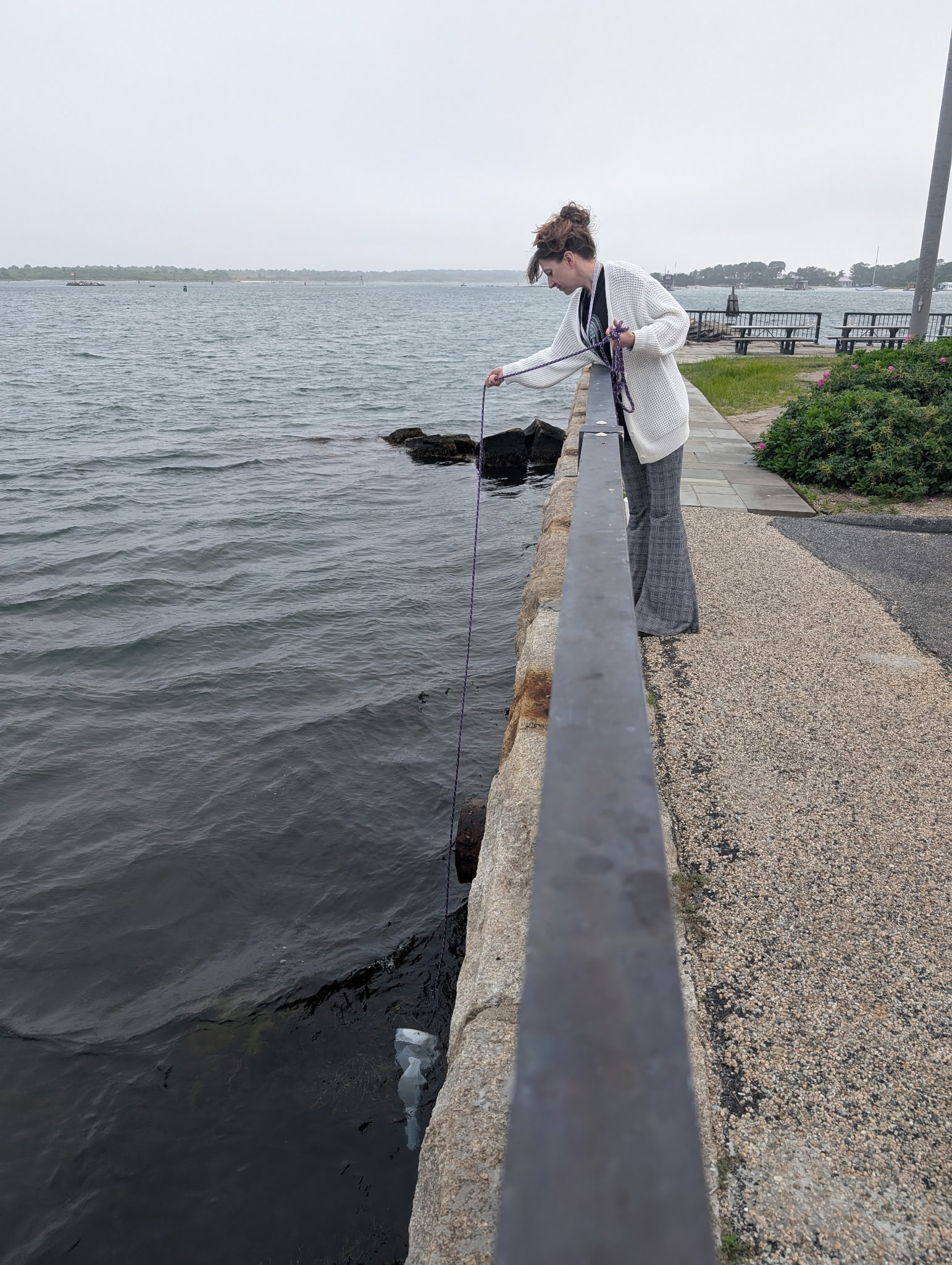
Searching for Stentor at MBL
On August 23, 2022, Kricket Ressler found her first Stentor under a microscope — and everything changed. What started as casual curiosity about pond life became a full-blown scientific career. She's been dedicated to learning everything she can about these remarkable trumpet-shaped single cells ever since.
In 2024, Kricket began volunteering at the Cortes Lab at Virginia Tech because of her love for Stentor, and in 2025 became a Research Assistant, running phototaxis experiments on a newly discovered species, Stentor stipatus. She spent a summer as a visiting researcher at the Marine Biological Laboratory in Woods Hole, Massachusetts — one of the most storied research institutions in biology. Most recently, she visited Jess Holz's studio/lab in Boston to film Stentor using Jess's time-lapse software.
Her most exciting work right now? Identifying three potentially new species of Stentor that she has discovered but hasn't named yet, because these finicky organisms keep dying before they can be cultured and studied. The art of keeping a brand-new species alive, it turns out, is a science in itself.
Beyond the bench, Kricket is a passionate science communicator with nearly 50,000 followers on TikTok, where she teaches people about the weird and wonderful world of freshwater microorganisms. She's also a musician, writer, and the proud human of Mr. Seymour Chonky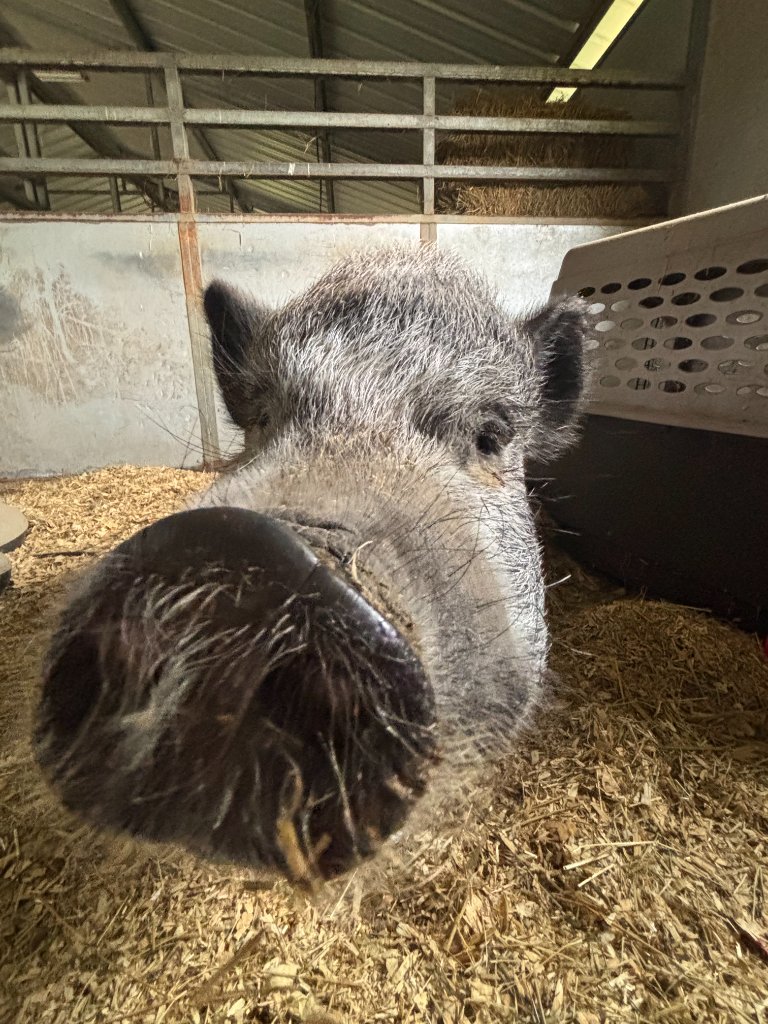 , her beloved rescue pig.
Stentor Species Hunter
Discovering and characterizing new species of the giant ciliate Stentor, from Cape Cod ponds to NC rivers.
Phototaxis & Behavior
Studying how single cells respond to light, learn from stimuli, and exhibit complex behaviors — all without a brain.
Musician & Creator
Songwriter, singer, and science communicator on TikTok and YouTube, making microscopic life exciting for everyone.
Pig Mom
Proud companion to Mr. Seymour Chonky, a rescue pig who is almost certainly the lab's unofficial mascot.
Research
Teaching cells to tell us their secrets
Working at the intersection of cell biology, behavior, and ecology — asking how single cells can learn, adapt, and evolve complex behaviors without a brain or nervous system.
Phototaxis in S. stipatus
Kricket ran phototaxis experiments on the newly discovered Stentor stipatus, characterizing how these cells respond to different wavelengths of light. S. stipatus shows strong positive phototaxis with a unique action spectrum — peaking around 590-600 nm — distinct from any other known Stentor species. The phototaxis strength also follows a diurnal cycle, hinting at circadian regulation in a single cell.
New Species Discovery
Kricket is currently working with colleagues on three newly discovered Stentor species, including S. stipatus, which was just published. In addition, she has identified three more previously unknown Stentor species that have been confirmed through genome sequencing but have not yet been formally described or named. Culturing these organisms is extremely difficult because they are highly sensitive to environmental conditions and require habitats that closely match their natural environments. The careful work of discovering and maintaining these species is the frontier of protist biodiversity.
Phylogenetics & Genomics
Using 18S SSU rDNA sequencing, Kricket contributes to building the molecular phylogeny of Stentor — confirming that newly found organisms are truly distinct species. This work feeds into the broader Cortes Lab goal of sequencing macronuclear genomes for all Stentor species, creating a complete genetic map of the genus.
Habituation & Learning
S. stipatus demonstrates habituation — a form of non-associative learning — in response to repeated mechanical stimulation. Remarkably, these cells habituate faster than S. coeruleus to the same high-force stimuli, as shown by Deepa Rajan in the publication. Studying how a cell without a nervous system can learn is one of the most exciting frontiers in biology.
Fun Fact
Stentor are named after the Greek herald in Homer's Iliad who had "a voice as powerful as fifty voices of other men" — a nod to these cells' dramatic trumpet shape. They can grow up to 2-3 millimeters long, making them visible to the naked eye. Despite being single cells, they can regenerate from fragments, make complex decisions, and even learn from repeated stimuli.
Publications
Published work
Stentor stipatus is a new unicellular species that demonstrates habituation and unique phototaxis
Deepa H. Rajan, Benjamin Lee, Ashley Albright, Eric Tang, Kristen Ressler, Arnie Maravillas, Carmen Vargas, Wallace F. Marshall & Daniel B. Cortes
Introduces S. stipatus as a new Stentor species found in the iron-rich white cedar swamps of Cape Cod. The paper presents morphological, phylogenetic, and behavioral characterizations — including the phototaxis experiments that Kricket performed, revealing a unique action spectrum and evidence of circadian regulation in phototactic response.
More publications to come as new species are formally described.
Connect
Let's talk science
Whether it's about Stentor, pond life, or collaborations — feel free to reach out.

